High Altitude Baking Tips & Tricks (That Actually Work)
If you’ve ever pulled a sunken cake, a bread that never rose, or cookies that spread into one giant sheet out of your oven, you’ve run into the most common problem in high altitude baking — and I promise, it’s probably not you. It’s your elevation.
I bake from scratch at 7,053 ft in Colorado Springs, and I spent years fighting recipes that were written for sea level before I understood what altitude actually does to baked goods. No 37-ingredient recipes, no gadgets, no guesswork — just what I’ve learned from real trial and error in my own kitchen.
Here’s the thing most altitude charts get wrong: they treat every baked good the same way. What fixes a cake will wreck a loaf of bread. So let’s break this down by what’s actually happening, not just a generic list of substitutions.
Quick answer: High altitude baking (above ~3,000 ft) requires adjustments because lower air pressure speeds up gas expansion and drier air speeds up evaporation. Cakes and quick breads generally need less leavening, slightly more liquid, and a higher oven temperature. Yeast bread and sourdough generally need more hydration but less proofing time, since they rise faster, not slower.
Why Altitude Messes With Your Baking in the First Place
Two things change as you climb in elevation, and they’re the root of almost every altitude baking problem:
- Lower air pressure — gases expand faster and escape faster. Anything relying on trapped air or CO2 (cakes, quick breads, muffins) rises quicker, then can collapse before the structure sets.
- Drier air — moisture evaporates faster, both in your kitchen and in your oven. Doughs and batters dry out sooner than the recipe expects.
Once you understand those two forces, you can figure out why a recipe is failing instead of just guessing at random fixes.
The Mistake Almost Everyone Makes
Most altitude adjustment charts tell you to add liquid and reduce leavening — and for cakes, quick breads, and anything using baking powder or baking soda, that’s correct. Lower the leavening, add a bit of liquid, sometimes bump the oven temp slightly.
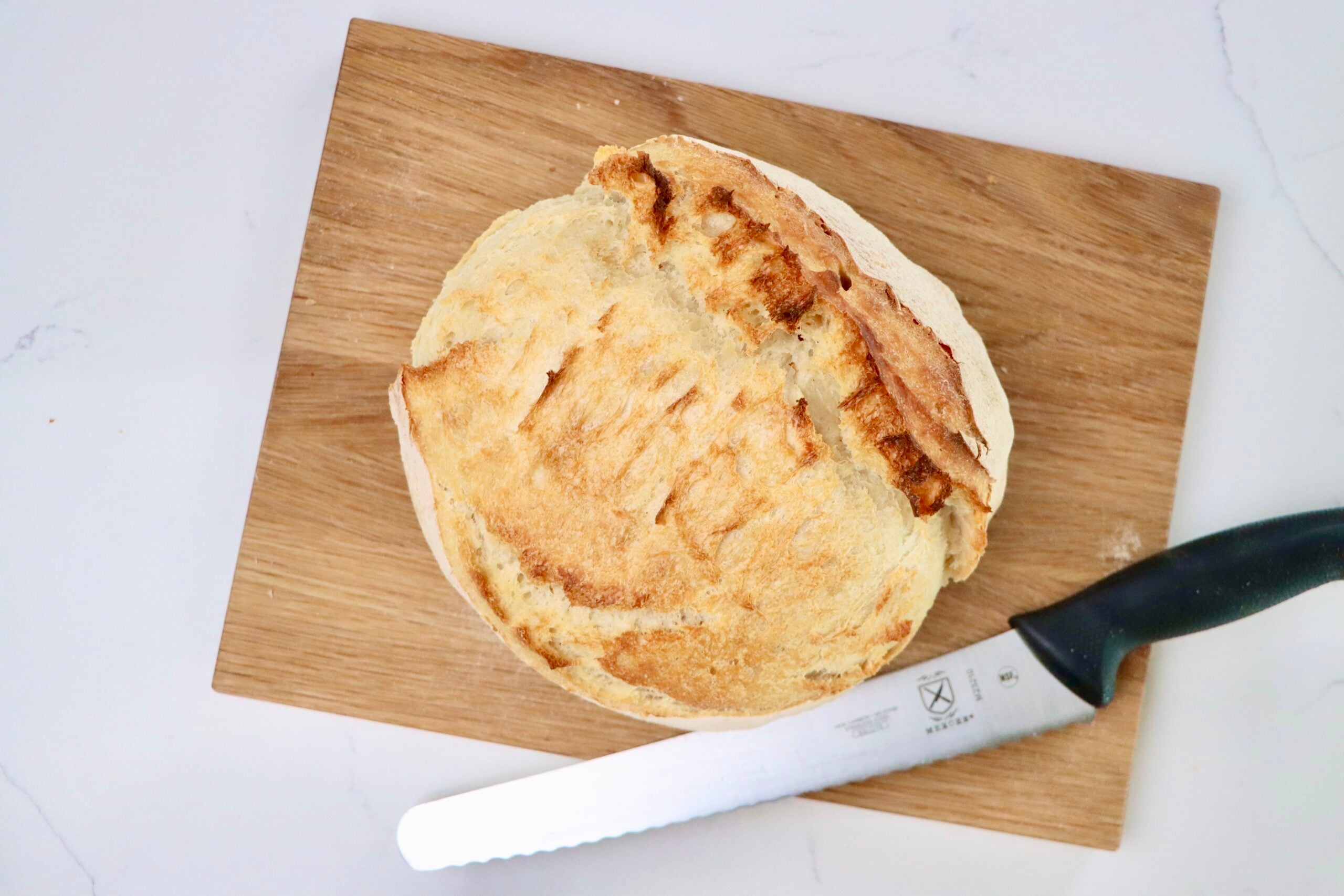
But that rule flips for yeast-based baking, including sourdough — and it flips in two different ways. First, on hydration: yeast doughs are fighting dry air pulling moisture out, so high-altitude sourdough and yeast bread generally need more hydration, not less — often 5–10% more water than a sea-level recipe calls for. Second, on timing: that same lower air pressure that collapses cakes also speeds up fermentation, so your dough will likely proof faster than the recipe says, not slower. The real risk is over-proofing, not under-proofing — dough that’s gone too far will spread out flat once you score it and give you a dense, gummy loaf. If you’ve been treating your sourdough like your cake recipes, or trusting a sea-level clock instead of watching the dough, that’s likely why your loaves keep coming out dense or collapsing after scoring.
General High Altitude Baking Tips
A few adjustments that apply across most baked goods at elevation:
- Increase oven temperature slightly (about 15–25°F) for cakes and quick breads, so the structure sets before the rise gets away from it.
- Reduce sugar slightly in cakes — sugar weakens structure, and that matters more when things are already rising fast.
- Watch your baking time, not just the recipe’s clock. Drier air means faster evaporation, so things can finish sooner than written.
- Increase liquid in most recipes to counteract faster evaporation — but how much and why depends on what’s leavening the recipe (see above).
- Store flour and starters properly. Dry air pulls moisture out of everything sitting on your counter, including your sourdough starter between feeds.
- Don’t trust a generic chart blindly. Every recipe reacts a little differently — these are starting points, not guarantees.
Elevation-Specific Adjustments by Baked Good
| Baked Good | What Usually Goes Wrong | General Fix |
|---|---|---|
| Cakes | Sinks in the middle, dry texture | Slightly less leavening, slightly more liquid, higher oven temp |
| Cookies | Spreads too thin | Slightly less sugar/fat, chill dough longer |
| Quick breads/muffins | Domes then collapses | Reduce leavening slightly, don’t overmix |
| Yeast bread & sourdough | Over-proofs fast, collapses after scoring, dries out | More hydration (not less), but less proof time — watch the dough, not the clock |
Note: This is a starting framework, not a substitute for testing — every oven, every kitchen, and even every specific elevation within “high altitude” behaves a little differently.
Frequently Asked Questions
Does altitude really affect baking?
Yes — anything above about 3,000 feet needs adjustments. Lower air pressure makes gases expand faster (so cakes and quick breads rise fast, then can collapse), and drier air pulls moisture out of dough and batter faster than sea-level recipes expect.
What temperature should I bake at for high altitude?
As a general starting point, increase your oven temperature by 15–25°F for cakes and quick breads. This helps the structure set before the rise outpaces it. Yeast bread and sourdough don’t need the same temperature bump — their main issue is fermentation speed, not oven temperature.
Does bread rise faster at high altitude?
Yes. The same lower air pressure that collapses cakes also speeds up fermentation in yeast dough and sourdough. That means proofing usually finishes faster than a sea-level recipe states, and the real risk is over-proofing, not under-proofing.
Do I need special equipment to bake at high altitude?
No. These are ingredient, timing, and temperature adjustments — not equipment purchases. A kitchen scale and an oven thermometer help with accuracy, but nothing here requires special gear.
Where to Go From Here
If sourdough is your main focus, I’ve got a dedicated high altitude sourdough guide that goes deep on hydration ratios, proof times, and starter maintenance at elevation. This post is meant to be the broader picture; that one’s the specifics.
Baking at altitude isn’t about a magic chart — it’s about knowing which force you’re fighting: too much rise, or too little moisture. Once you know that, you can adjust almost any recipe with confidence.
What’s the baked good that’s given you the most trouble at altitude? Let me know in the comments — I probably have a fix for it. And if this saved you a ruined bake, follow along on Instagram or subscribe on YouTube — I’m baking through every fix on this list on camera, one recipe at a time.