Easy Homemade Pasta from Scratch (With Just 5 Simple Ingredients)
Learn how to make easy homemade pasta from scratch using eggs, flour, water, and salt. No machine required—perfect for beginners!
This post may contain affiliate links. As an amazon associate I earn from qualifying purchases at no additional cost to you.
Homemade pasta is one of those foods from my childhood that I remember so fondly. My grandma would always make it with her chicken noodle soup, leaving the noodles thick and hearty—my absolute favorite. I didn’t get them often, which somehow made them even more special, but I looked forward to them every single time. This recipe is the closest I’ve been able to recreate hers, and of course, I had to share it with you.
There is truly something special about making homemade pasta from scratch. With just a few simple pantry ingredients, you can create fresh, tender pasta that tastes worlds better than anything from a box. This easy homemade pasta recipe is made with real, whole ingredients, requires no special tools, and comes together right in your own kitchen with minimal effort.
Whether you’re rolling it out by hand or using your mixer attachments, this fresh pasta recipe is perfect for cozy family dinners, special occasions, or anytime you want to elevate a simple meal with from-scratch cooking.
Why You’ll Love This Homemade Pasta Recipe
- Made with only 5 simple ingredients
- No pasta machine required
- Beginner-friendly and forgiving dough
- Light, tender texture with rich egg flavor
- Freezer-friendly for easy meal prep
- Use in your favorite soups or pasta dishes
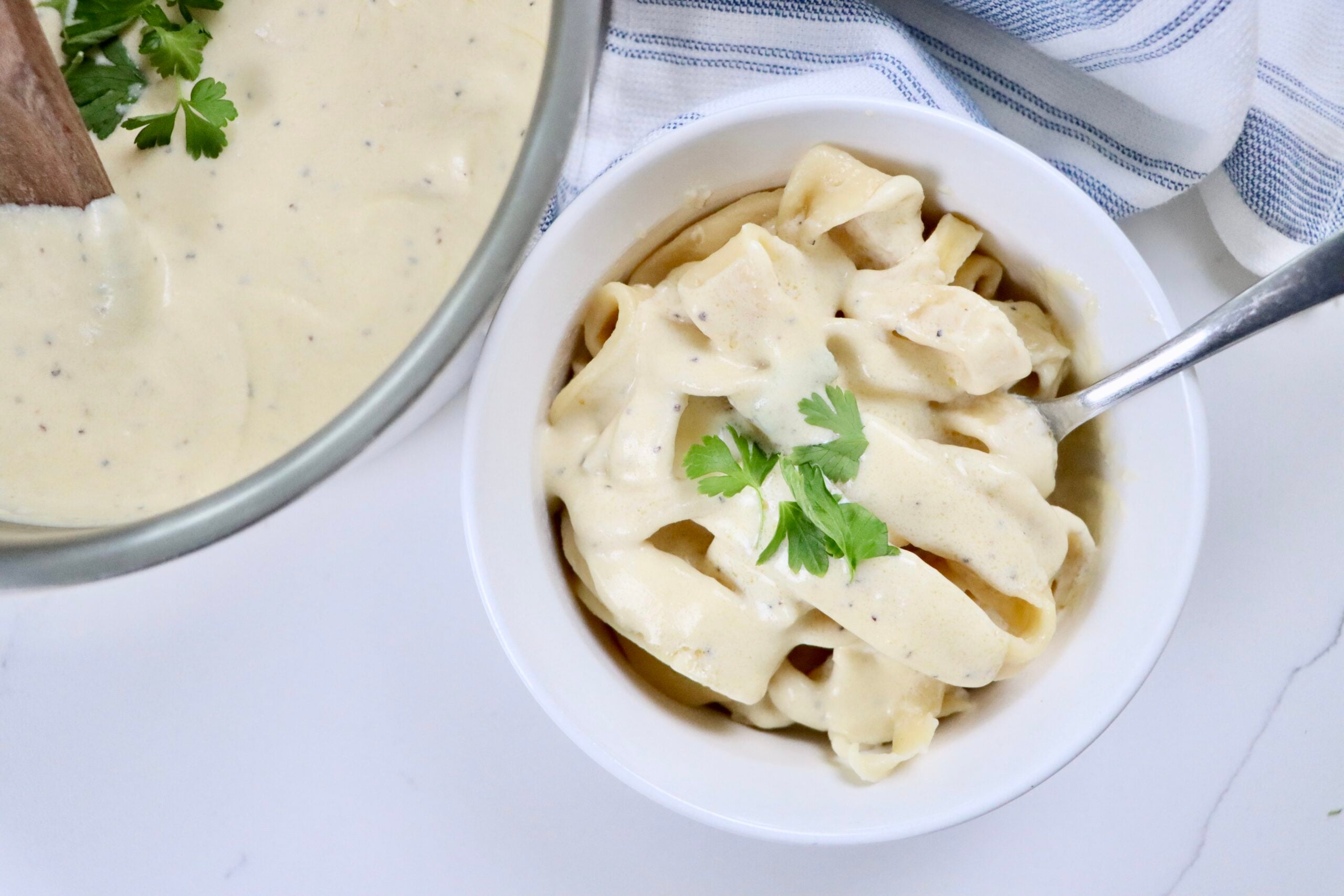
- Perfect with my alfredo sauce, homemade chicken spaghetti, marinara, pesto, or butter and garlic.
Once you make pasta at home, it’s hard to go back to store-bought!
Ingredients for Homemade Pasta
That’s it—no preservatives, no artificial ingredients, just real food.
How to Make Homemade Pasta from Scratch
This method works whether you roll by hand or use a mixer with pasta attachments.
1. Mix the Dough
In a large bowl, mix together the eggs, water, and salt using a fork. Slowly add in the flour, continuing to stir until a shaggy dough begins to form.
2. Knead the Dough
Switch from a fork to your hands and knead the dough until it comes together into a smooth ball. The dough should be firm but not sticky. If it feels sticky, sprinkle in a little more flour, one tablespoon at a time.
3. Rest the Dough
Cover the dough (I like to use these silicone bowl covers) and let it rest for 20–30 minutes at room temperature. This allows the gluten to relax and makes rolling much easier.
4. Roll Out the Dough
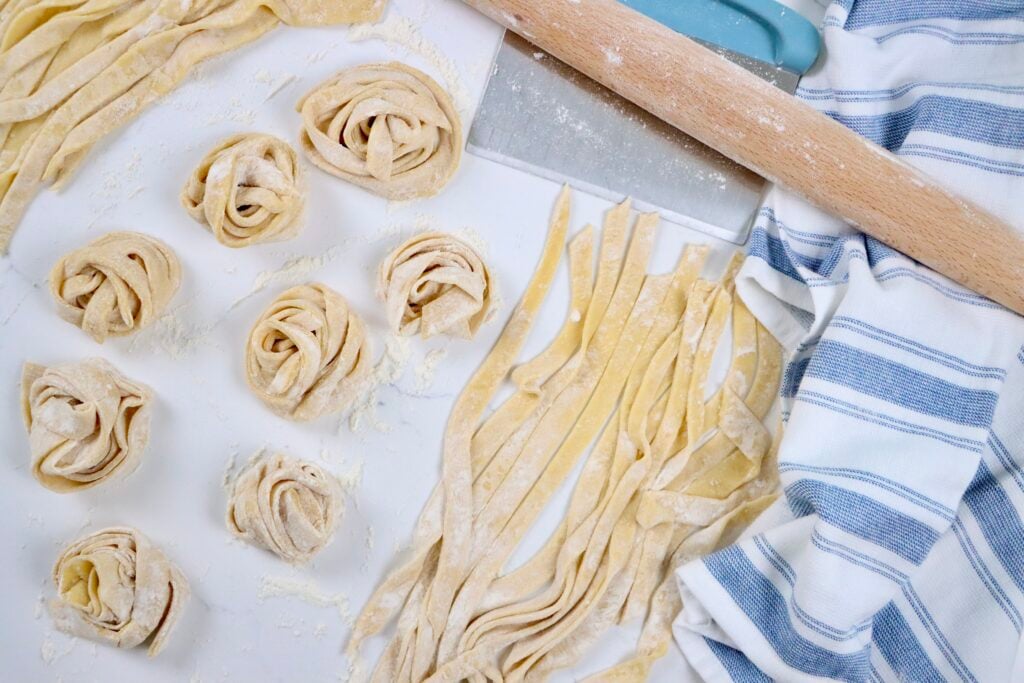
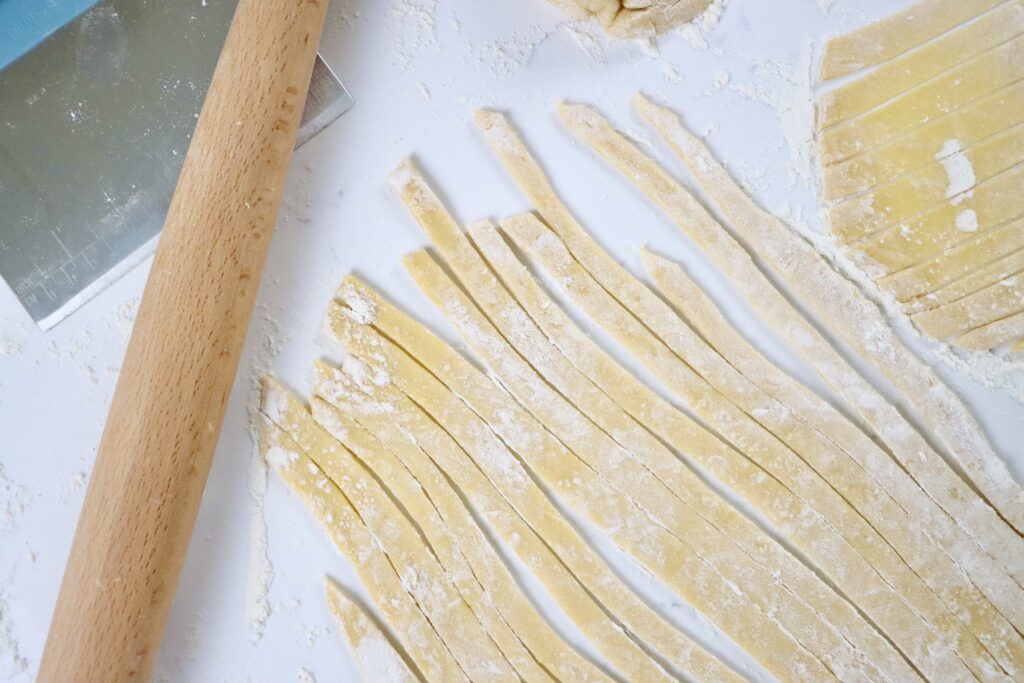
Using a bench scraper divide the dough into smaller sections. Roll each portion out with a rolling pin (I love my french rolling pin) on a lightly floured surface, or run it through your mixer’s pasta attachments until thin. How thin is up to you and the type of pasta you want.
5. Cut the Pasta
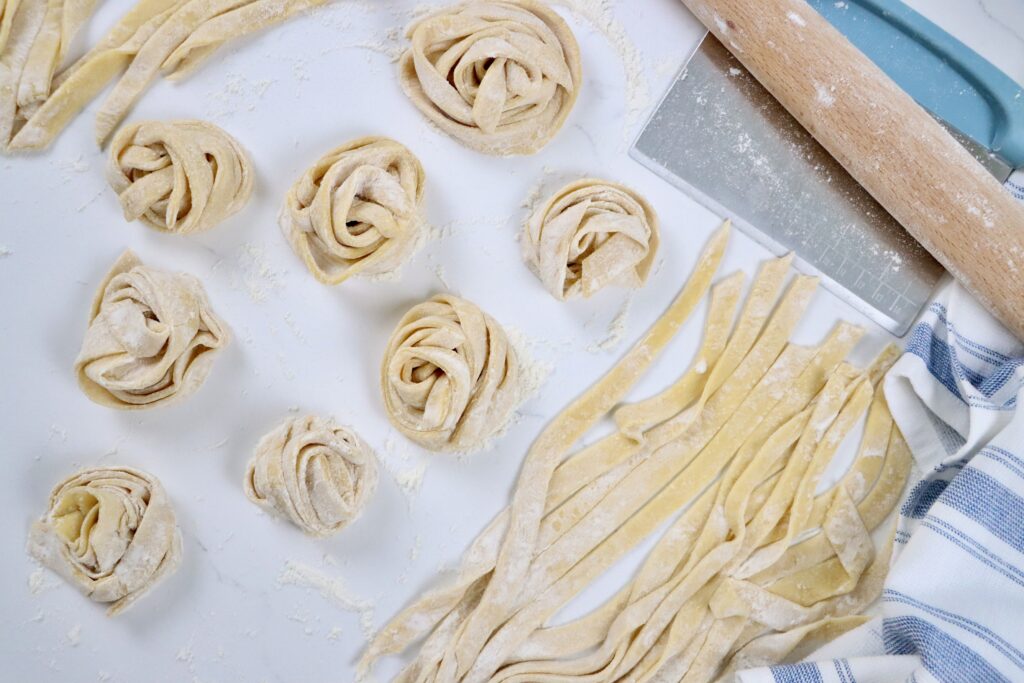
Slice into your desired shape—fettuccine, linguine, or rustic hand-cut noodles all work beautifully. When I am doing this by hand I like to slice with a pizza cutter, but you could certainly use your favorite knife.
6. Dry the Pasta
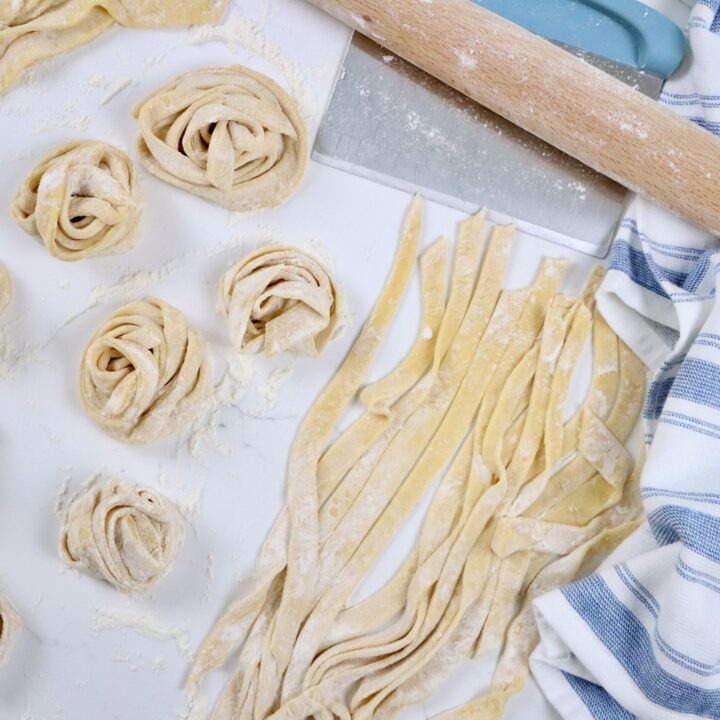
Lay the cut pasta on a lightly floured surface or hang it to dry on a pasta drying rack for 20–30 minutes before cooking or storing.
How to Cook Fresh Homemade Pasta
Bring a large pot of generously salted water to a rolling boil. Add the fresh pasta and cook for 2–4 minutes, stirring gently. Fresh pasta cooks much faster than dried pasta, so keep a close eye on it. When it floats and is tender, it’s ready.
Drain and serve immediately with your favorite sauce.
How to Store & Freeze Homemade Pasta
- Refrigerator: Fresh pasta can be stored in an airtight container for up to 2 days.
- Freezer: Freeze pasta in loose nests on a baking sheet, then transfer to a freezer bag. It will keep for up to 2 months.
- Dry Storage: Allow pasta to dry completely and store in a sealed container for up to 2 weeks.
Cook frozen pasta straight from the freezer—no thawing needed.
Best Sauces for Homemade Pasta
Fresh pasta pairs beautifully with almost any sauce. Some of my favorites include:
- Homemade Alfredo Sauce
- Classic Marinara
- Garlic Butter Sauce
- Fresh Basil Pesto
Because fresh pasta is so tender, lighter sauces really let the flavor shine. Make this pasta into spaghetti noodles and use in my Chicken Spaghetti Recipe.
Tips for Perfect Homemade Pasta Every Time
- If the dough is too sticky, add flour 1 tablespoon at a time.
- If the dough is too dry or crumbly, add a teaspoon of water at a time.
- Keep cut pasta lightly floured to prevent sticking.
- Don’t overcook—fresh pasta only needs a few minutes.
High Altitude Tip for Colorado Cooks (or those at higher altitudes)
At higher elevations like Colorado Springs, you may notice the dough dries out slightly faster. If needed, add an extra 1–2 teaspoons of water to keep your dough soft and workable. Rolling slightly thicker can also help prevent drying and cracking.

Frequently Asked Questions
There is nothing quite like the taste of fresh homemade pasta made from scratch. With just five simple ingredients and a little time, you can create a meal that feels both comforting and special. This recipe is proof that everyday cooking with real ingredients truly makes all the difference.
Don’t forget to check out the full step-by-step video on YouTube (video linked above), and be sure to leave a comment letting me know how yours turned out! Save this recipe on Pinterest, then follow me on YouTube, TikTok, and instagram @my.colorado.kitchen so you never miss a new recipe.
Don’t forget to pin this for later!

Homemade Pasta
Learn how to make easy homemade pasta from scratch using eggs, flour, water, and salt. No machine required—perfect for beginners!
Ingredients
- 3 eggs
- ½ cup water
- 1 tsp salt
- 2 ¾ cups all-purpose flour
Instructions
This method works whether you roll by hand or use a mixer with pasta attachments.
1. Mix the Dough
In a large bowl, mix together the eggs, water, and salt using a fork. Slowly add in the flour, continuing to stir until a shaggy dough begins to form.
2. Knead the Dough
Switch from a fork to your hands and knead the dough until it comes together into a smooth ball. The dough should be firm but not sticky. If it feels sticky, sprinkle in a little more flour, one tablespoon at a time.
3. Rest the Dough
Cover the dough (I like to use these silicone bowl covers) and let it rest for 20–30 minutes at room temperature. This allows the gluten to relax and makes rolling much easier.
4. Roll Out the Dough
Using a bench scraper divide the dough into smaller sections. Roll each portion out with a rolling pin (I love my french rolling pin) on a lightly floured surface, or run it through your mixer’s pasta attachments until thin. How thin is up to you and the type of pasta you want.
5. Cut the Pasta
Slice into your desired shape—fettuccine, linguine, or rustic hand-cut noodles all work beautifully. When I am doing this by hand I like to slice with a pizza cutter, but you could certainly use your favorite knife.
6. Dry the Pasta
Lay the cut pasta on a lightly floured surface or hang it to dry on a pasta drying rack for 20–30 minutes before cooking or storing.
Notes
Storage and Freezing
- Refrigerator: Fresh pasta can be stored in an airtight container for up to 2 days.
- Freezer: Freeze pasta in loose nests on a baking sheet, then transfer to a freezer bag. It will keep for up to 2 months.
- Dry Storage: Allow pasta to dry completely and store in a sealed container for up to 2 weeks.
Cook frozen pasta straight from the freezer—no thawing needed.
Tips
- If the dough is too sticky, add flour 1 tablespoon at a time.
- If the dough is too dry or crumbly, add a teaspoon of water at a time.
- Keep cut pasta lightly floured to prevent sticking.
- Don’t overcook—fresh pasta only needs a few minutes.
Nutrition Information:
Yield: 6 Serving Size: 1Amount Per Serving: Calories: 187Total Fat: 3gSaturated Fat: 1gUnsaturated Fat: 2gCholesterol: 93mgSodium: 402mgCarbohydrates: 32gFiber: 1gSugar: 0gProtein: 7g
Nutrition facts are calculated automatically and are approximate.